In the Winter of 1899, a Santa Fe Train Bound for Denver Turned Back to Pueblo
A railroad historian’s column describes drifts that closed the Santa Fe line at the Palmer Divide. The Pueblo detail rests on that one account.
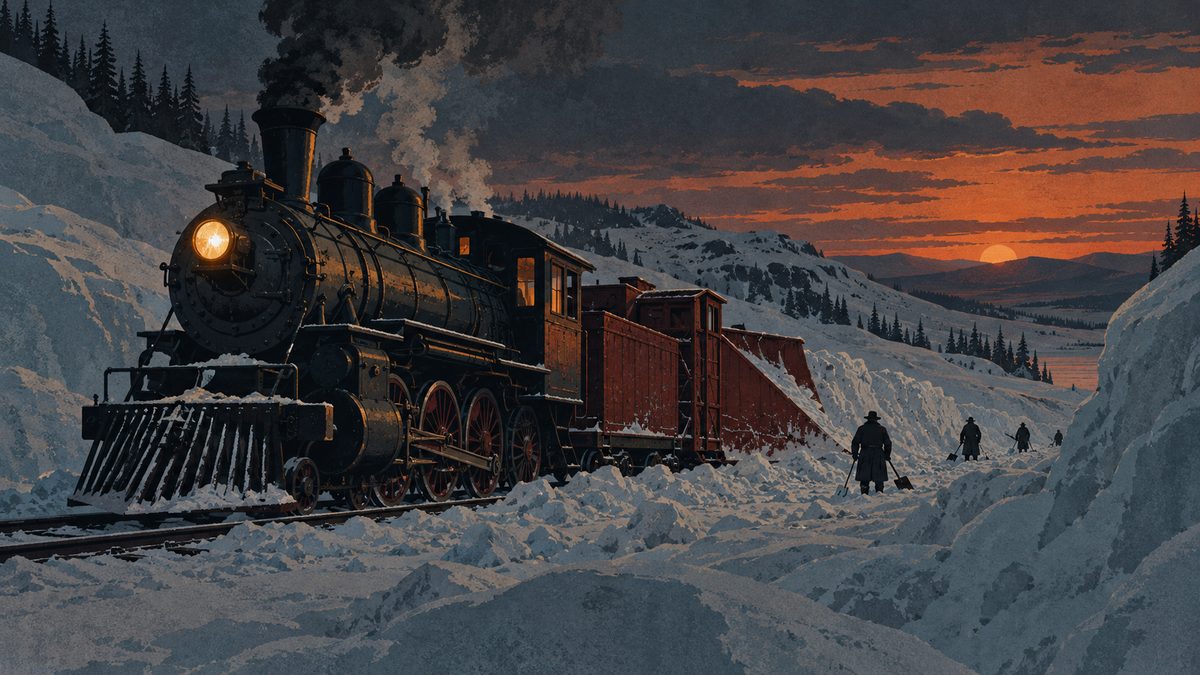
According to a Colorado Springs Gazette column by railroad historian Mel McFarland, the Santa Fe’s morning train to Denver was stopped by drifts near Monument in the winter of 1899 and “went back to Pueblo.” The column gives no calendar date for that day.
It is the only account the Ledger found that puts a Pueblo train into the storm. The wider winter is better documented.
What the column says
McFarland writes that the storms began in late January and kept coming through most of February on the Front Range. In the mountains, he says, snow lasted until nearly April.
On the Santa Fe, a blockade about 1,000 feet long sat between Monument and Palmer Lake. The Rio Grande was hit too. Its trains were very late one afternoon, but the column says they were “running all right the next day.”
The column says a force of 300 men worked through a Tuesday night on drifts five miles south of Monument. By 11 a.m. Wednesday the track was clear. The Santa Fe superintendent reportedly said he had never seen so much trouble from snow and wind.
Elsewhere, according to the column, lines serving Cripple Creek and Leadville struggled, and snowplows were borrowed from as far away as Iowa. In Colorado Springs, mail arrived on a coal car, with passengers in a caboose “up from Pueblo.”
The wider winter
Other sources confirm a severe winter, though none mention Pueblo. A 2005 Colorado Climate Center presentation by Nolan Doesken lists January 1899 among Colorado’s notable storms: “Huge mountain snow halted railroad traffic. Resulted in several deaths.”
A Frontier Historical Society column describes an avalanche on the night of February 1, 1899, that stopped a Denver & Rio Grande Western passenger train in Glenwood Canyon. It says three men died in a later slide while crews worked to clear the line.
A Breckenridge history page says the last train crossed Boreas Pass on February 6, and that the blockade there lasted 78 days.
A second McFarland column says a rotary plow kept the Palmer Divide line clear after severe blockades that winter. It describes the Denver & Rio Grande, not the Santa Fe. Both columns are by the same author, so they are not independent of each other.
What we don’t know
- The calendar date of the Santa Fe blockade. The column gives only weekdays.
- What McFarland used for his account. The column, as the Ledger read it, does not name its source.
- How long Pueblo’s own rail traffic was disrupted. The record the Ledger has seen does not say.
- Where the plows came from. McFarland’s 2020 column says Iowa. Another of his columns says crews came from as far away as Chicago.
Pueblo newspapers from early 1899 would likely settle the date and the Pueblo detail. The Ledger could not search them in time.